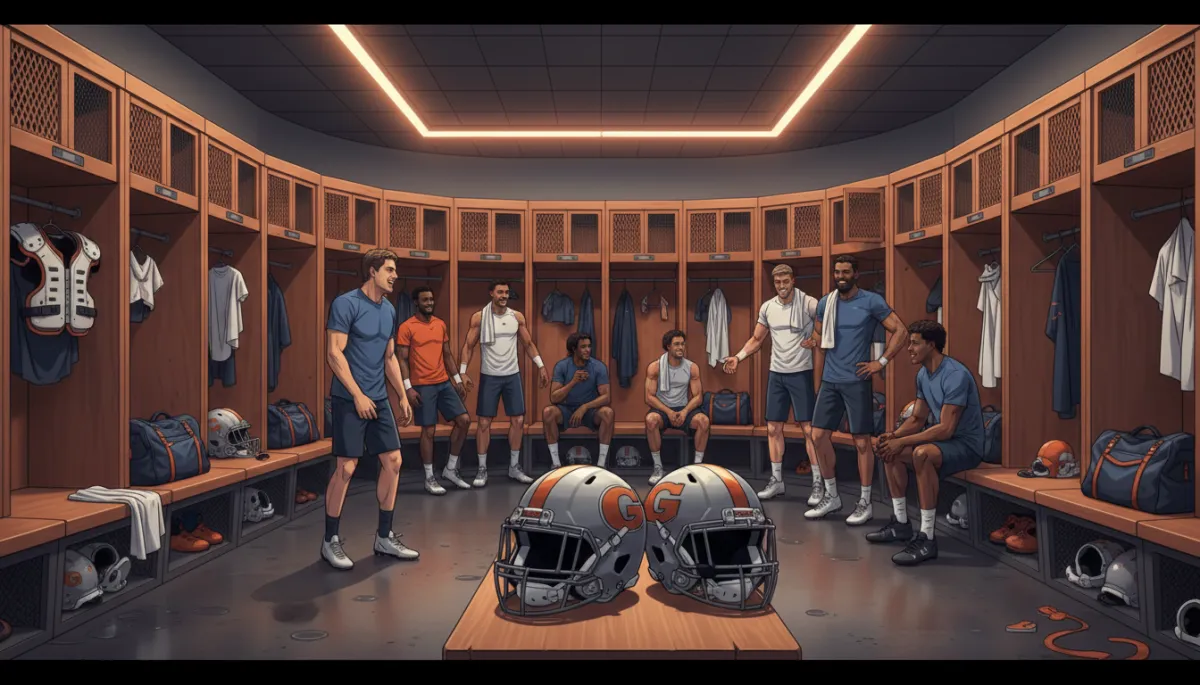
How to Survive Your First College Football Locker Room
College Sports, Football Culture
How to Survive (and Thrive) in the College Football Locker Room
The college football locker room can be intimidating, intense, and unforgettable. Here’s how to navigate the culture, earn respect, and make it a place that elevates your game instead of breaking your confidence.
Understand the Culture Before You Judge It
A college football locker room is loud, competitive, and full of personalities. It’s where jokes fly, music blasts, tensions flare, and lifelong friendships are built. If you walk in expecting it to feel like a quiet classroom, you’ll be overwhelmed fast. Instead of judging it, take a week or two to simply observe. Notice who leads, who listens, who jokes, and who sets the tone when things get serious. The more you understand the rhythm of the room, the easier it becomes to find your place in it.
📌 Key Takeaway: Don’t rush to fit in. Watch, listen, and learn how your team communicates before you try to match the energy.
Respect Is Your First Priority
Talent might have gotten you into the program, but respect keeps you in the room. That starts with basics:
Show up on time or early—being late to the locker room is noticed quickly.
Keep your area clean; nobody wants to live in someone else’s mess.
Don’t touch another player’s gear without asking—ever.
Say “please,” “thank you,” and learn names, especially of staff and trainers.
Respect also means understanding boundaries. Locker room humor can be ruthless, but you don’t have to laugh at or join in every joke. Avoid anything that targets race, religion, family, or serious personal issues. Those lines, once crossed, are hard to come back from and can destroy trust in a heartbeat.
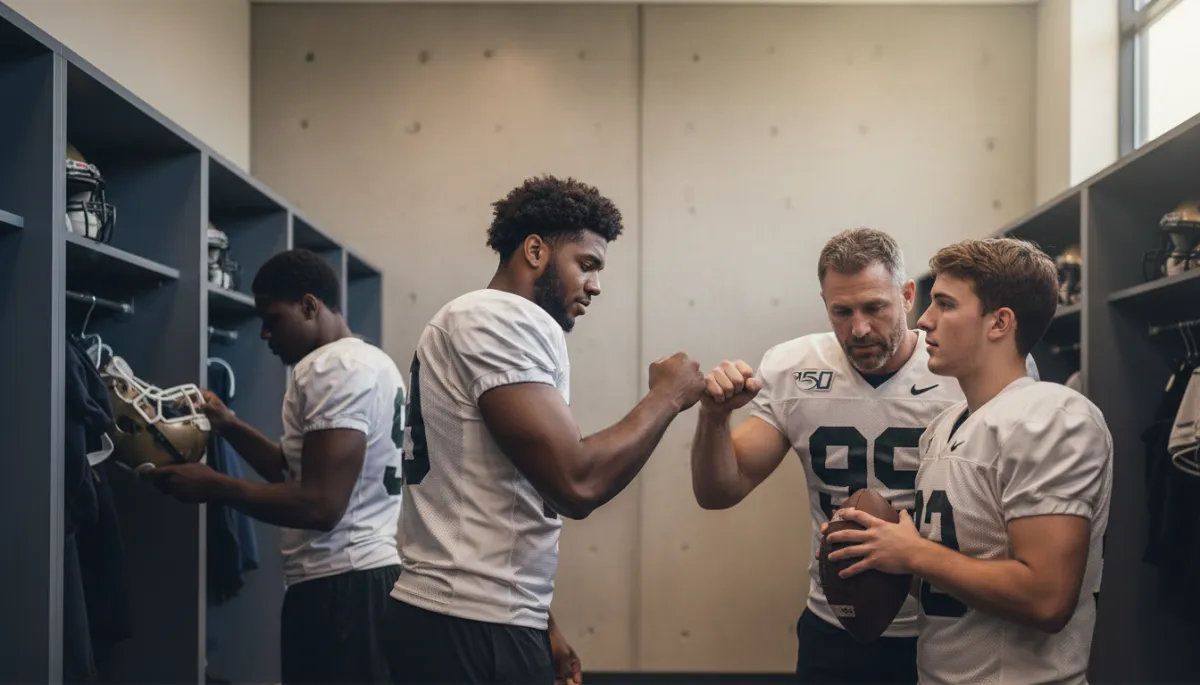
Daily habits of respect and effort earn trust faster than big speeches.
Let Your Work Speak Before Your Words Do
In a new locker room, nobody cares what you did in high school after the first week. Veterans have seen a dozen “next big things” come and go. What they respect is consistency: showing up early for taping, finishing your lifts, running through after-practice stretches without cutting corners. When you quietly handle your business day after day, people notice. That’s how you go from “the freshman” to “our guy” much faster than by talking about your stats.
💡 Pro Tip: When you’re new, talk less in the locker room and ask more questions on the field and in the film room.
Handle Jokes, Hazing, and Pressure the Right Way
Most locker rooms have a joking culture, especially toward younger players. Some of it is harmless—nicknames, light teasing, rookie duties like picking up towels. Learning to laugh at yourself and not take everything personally goes a long way. But there’s a line between team bonding and toxic behavior. If something feels degrading, unsafe, or crosses your values, you’re not weak for saying so. Talk privately with a trusted veteran, position coach, or staff member. Real leaders don’t need cruelty to build chemistry.
Remember, you’re allowed to have boundaries. You can still be a great teammate while choosing not to participate in things that put you or someone else at risk—whether that’s reckless stunts, bullying, or behavior that could get the whole team in trouble with coaches or compliance staff.
Take Care of Your Body and Your Space
Surviving the locker room isn’t just social—it’s physical. This is where you get taped, treat injuries, hydrate, and mentally reset. Pack your bag the night before so you’re not scrambling for pads or cleats. Keep shower essentials, sandals, and a small towel ready. Wipe down your area, hang your gear so it dries, and respect shared spaces like training tables and cold tubs. Trainers and equipment staff remember who makes their jobs easier, and that goodwill matters more than you think when you need a favor on a tough day.
Protect Your Mind in a High-Pressure Environment
The locker room is where emotions spill over—after cuts, after losses, and after big wins. One day you might feel on top of the world, the next you’re wondering if you still belong. Build small routines that ground you: putting on your pads in the same order, taking a few deep breaths before you leave your locker, listening to a pregame playlist that calms instead of only hyping you up. If the noise and pressure get heavy, it’s not a sign of weakness to talk to a sports psychologist, counselor, or mentor. Protecting your mental health is part of being a complete athlete.
📌 Key Takeaway: The strongest players are the ones who know when to ask for help, not just when to push harder.
Be the Teammate People Want Around
At the end of the day, surviving the college football locker room comes down to this: be the kind of person you’d want next to you before a big game. That means celebrating others’ success, checking on injured teammates, sharing a joke when tension is high, and knowing when to lock in and get serious. If you show up consistently, respect the room, and carry yourself with humility and confidence, the locker room stops being something to survive—and becomes one of the most meaningful parts of your college experience.
You won’t get everything right on day one. Nobody does. But if you commit to learning, listening, and leading in small ways, you’ll earn your place—not just on the depth chart, but in the stories your teammates tell long after the final whistle blows.
📌 Key Takeaway: The locker room is where your habits, character, and mindset show up first—make sure they match the player you want to be on Saturdays.
Ready to Take the Next Step?
If you or your athlete wants personalized guidance on navigating college football culture, building confidence, or preparing for that first locker room experience, you don’t have to figure it out alone.
Book a free consultation today to talk through your goals, challenges, and next steps. We’ll walk you through what to expect, how to prepare, and how to show up as the kind of teammate and leader coaches remember—for all the right reasons.