
Spring Football Practice: Insights for Recruits
Recruiting, College Football, Spring Practice
Attending Spring Practice as a Recruit: What You Can Learn From an Open Session
Spring football isn’t just another practice period for college programs—it’s a live classroom for recruits. An open spring session gives you a clear, unfiltered look at how a team really operates, far beyond what you’ll see on game day or in a highlight reel.
Why Spring Football Practice Matters for Recruits
When you attend spring football practice as a recruit, you’re stepping into the team’s everyday world. There’s no game-day smoke, no pre-produced hype video—just coaches, players, and the work they put in. That raw environment helps you decide if this program is truly the right fit for you on and off the field.
Spring ball is when coaches install schemes, evaluate depth charts, and test younger players. Watching that process in real time lets you see where you might fit and what would be expected of you if you joined the program. It’s one of the most valuable unofficial “interviews” you’ll ever experience—on both sides.
What You Can Learn From an Open Session
1. Coaching Style and Communication
The biggest thing you’ll notice at an open spring practice is how the coaches interact with players. Are they teachers, yellers, or a mix of both? Do they correct mistakes with clear instruction, or do they simply move on? Pay attention to position coaches in particular, because that’s who you’ll work with every day if you commit.
Also watch how coaches talk to different types of players—starters, backups, walk-ons. Consistent respect and accountability across the roster is a strong sign of a healthy culture. If you can picture yourself responding well to their style, that’s a positive signal. If you feel tense just watching, that’s worth noting too.
2. Practice Tempo, Organization, and Standards
A well-run spring practice moves with purpose. You’ll see clear periods, quick transitions between drills, and very little wasted time. Notice whether players jog from station to station, how quickly they reset between reps, and whether the staff holds everyone to the same standard of effort and focus.
Sloppy organization or constant confusion can be red flags. In contrast, a structured, high-tempo practice suggests a program that values discipline and preparation. Ask yourself honestly: can you keep up with this pace, and are you excited by it? That answer matters as much as any depth chart projection.
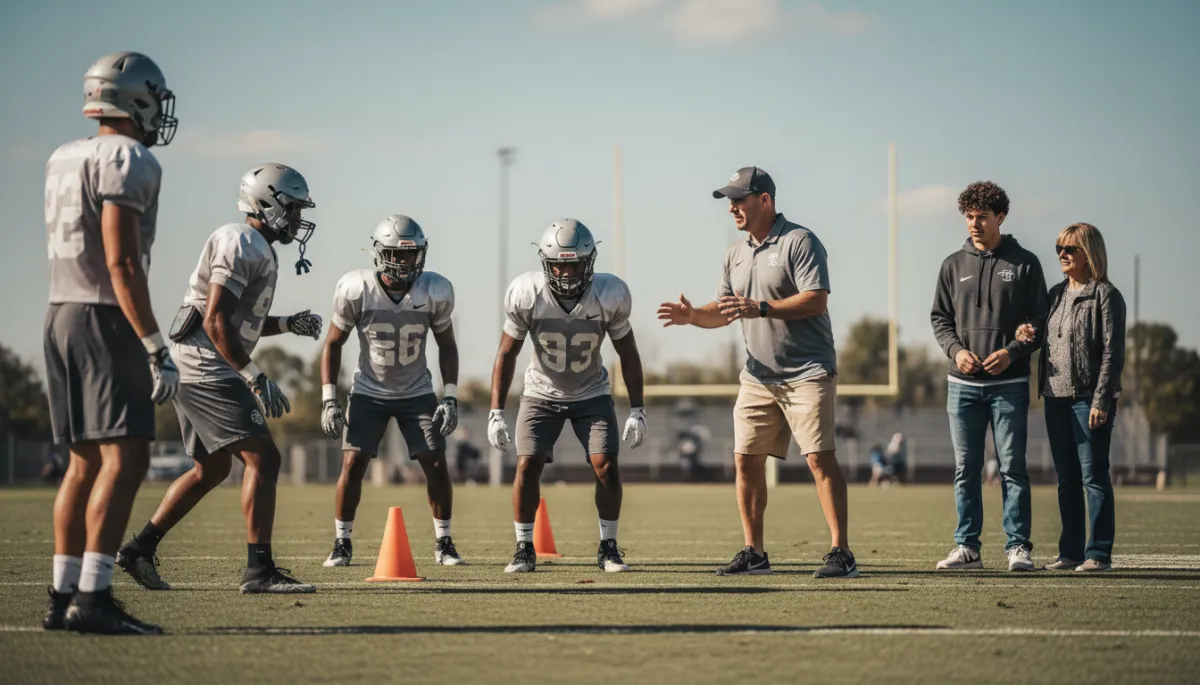
The way a staff runs drills reveals expectations for effort, detail, and discipline.
3. Team Culture and Player Relationships
Culture shows up in the small moments between whistles. Watch how players talk to each other after a mistake or a big play. Do veterans encourage younger guys? Do teammates celebrate each other’s wins, or is it every man for himself? You’re not just joining a roster; you’re joining a locker room and that environment will shape your daily experience.
You can also learn a lot from how players interact with staff members, trainers, and academic support personnel who might be around the field. Mutual respect and easy communication are signs that the program values people, not just performance. If possible, take note of how current players talk about their coaches and campus life when you get a chance to chat.
4. Scheme, Position Fit, and Opportunity
While you won’t learn the entire playbook from one open session, you can see the basics of the scheme. For example, as a quarterback, you might notice whether the offense leans heavily on quick-game concepts or deeper, timing-based throws. As a defensive back, you can see how often they’re in man versus zone and how much they rely on press coverage.
Look closely at the players currently in your position room. How many are in your class? How many seniors are ahead of you? Are younger players getting meaningful reps, or is the rotation tight? Those details help you understand whether there’s a realistic path to playing time and how long you might need to develop before seeing the field.
5. Facilities, Support Staff, and Overall Environment
An open spring practice also gives you a feel for the environment you’d live in every day. You may tour the weight room, locker room, and training facilities before or after the session. While shiny buildings aren’t everything, they do reflect the school’s investment in football and player development.
Pay attention to how organized the visit feels. Are staff members greeting families, answering questions, and helping you understand the schedule? Do you meet academic advisors or see study spaces? Those touches show whether the program views you as a whole person, not just an athlete.
How to Make the Most of Your Visit
Come prepared with questions about your position, development plan, and academic support.
Take mental notes on coaching tone, energy, and how players respond to feedback.
Talk to current players if you’re given the chance; they live the reality you’re considering.
Trust your instincts about whether you feel comfortable and motivated in that environment.
📌 Key Takeaway: An open spring football practice is more than a casual visit. It’s your chance to see the program at full speed, evaluate how you fit into the culture and scheme, and decide whether this is a place where you can grow as a player and as a person.
Final Thoughts: Seeing Beyond the Hype
Attending spring football practice as a recruit pulls back the curtain on what life in that program is really like. From coaching style and practice tempo to team culture and opportunity, an open session offers insights you simply can’t get from social media or campus brochures. Use what you see—and how it makes you feel—to guide one of the biggest decisions of your athletic career.
🎯 Ready to Get Noticed? Send us your game film and we’ll build a college‑ready highlight reel that flows, spotlights your best plays, and is easy for recruiters to evaluate in the first 30–60 seconds. Click here to get your highlight tape edited and start standing out on every coach’s screen.