
NCAA Lawsuits: College Football Players in 2026
College Sports, NCAA Lawsuits, College Football
How Many NCAA Lawsuits Involving College Football Players Surfaced in 2026?
Lawsuits have become a defining feature of modern college sports. In 2026, college football players were at the center of a wave of legal challenges that tested the NCAA’s rules on pay, eligibility, and power. This article breaks down how many key lawsuits emerged, what they were about, and why they matter for the future of the game.
So, How Many Lawsuits Are We Really Talking About?
Because lawsuits can be filed in different courts, overlap in subject matter, and include athletes from multiple sports, there is no single official “master count” of NCAA lawsuits against or involving college football players in 2026. However, drawing on public filings and litigation trackers, we can identify at least a dozen major, football‑connected cases active in 2026, plus dozens more eligibility challenges where football players are part of broader athlete groups.
These range from headline‑grabbing class actions attacking the NCAA’s name, image, and likeness (NIL) rules, to individual eligibility fights over transfer rules, age limits, and even sports betting penalties. Importantly, many of these suits are not football‑only, but they either: (1) are led by football players, (2) include football players in the proposed class, or (3) directly shape the rules governing college football.
📌 Key Takeaway: In 2026, there were multiple high‑profile lawsuits squarely involving college football players and over 60 additional eligibility‑related cases in which football athletes were among those seeking relief.
1. NIL and Revenue‑Sharing: Football Players Lead the Charge
The most visible 2026 lawsuits featuring college football players target the NCAA’s NIL and revenue‑sharing limits that followed the House v. NCAA settlement, a $2.8 billion deal approved in 2025 (legalclarity.org).
Ili & Mirer v. NCAA (June 9, 2026): USC linebacker Talanoa Ili and Stanford quarterback Charlie Mirer filed a proposed class action attacking the $20.5 million per‑school NIL revenue‑sharing cap as illegal price‑fixing and a violation of NIL laws in 17 states. They seek to lift the cap and recover treble damages for Division I football and basketball players (legalclarity.org; prnewswire.com).
Parallel NIL Class Action (June 10, 2026): The very next day, another law firm coalition filed a second class‑action on behalf of Division I men’s football and basketball players, again challenging post‑House NIL restrictions as anti‑competitive (prnewswire.com).
Taken together, that’s two major 2026 NIL class actions in which college football players are front‑and‑center plaintiffs, potentially involving thousands of current and former athletes if the classes are certified.
2. Eligibility and the “How Long Can I Play?” Question
Beyond money, many lawsuits in 2026 revolve around a simpler issue: Can this athlete still play? The NCAA’s evolving rules on age limits, transfer credits, and the so‑called five‑year or “five‑in‑five” model have triggered a flood of eligibility disputes.
Robinson v. NCAA (JUCO Rule): Four junior‑college transfer football players sued after the NCAA counted JUCO seasons toward their eligibility, threatening their ability to compete for West Virginia University in the 2025–26 season. A district court initially granted an injunction, but the Fourth Circuit vacated and remanded the decision on April 3, 2026 (law.justia.com). This is a direct football‑specific lawsuit in 2026.
Tristan Smith Injunction (Clemson WR): Clemson wide receiver Tristan Smith sued in early 2026 after being denied a fifth season. On June 12, 2026, a South Carolina judge granted a temporary injunction requiring the NCAA to declare him eligible for 2026–27 (legalclarity.org). Another football‑specific win in court.
Broader eligibility cases—like Campbell v. NCAA and age‑based rule challenges—are led mostly by basketball players but exist in a shared legal ecosystem. As of mid‑2026, sources estimate 60–70 eligibility‑related lawsuits pending across sports, many of which either include football players or will directly affect how long they can stay on the field (legalclarity.org).
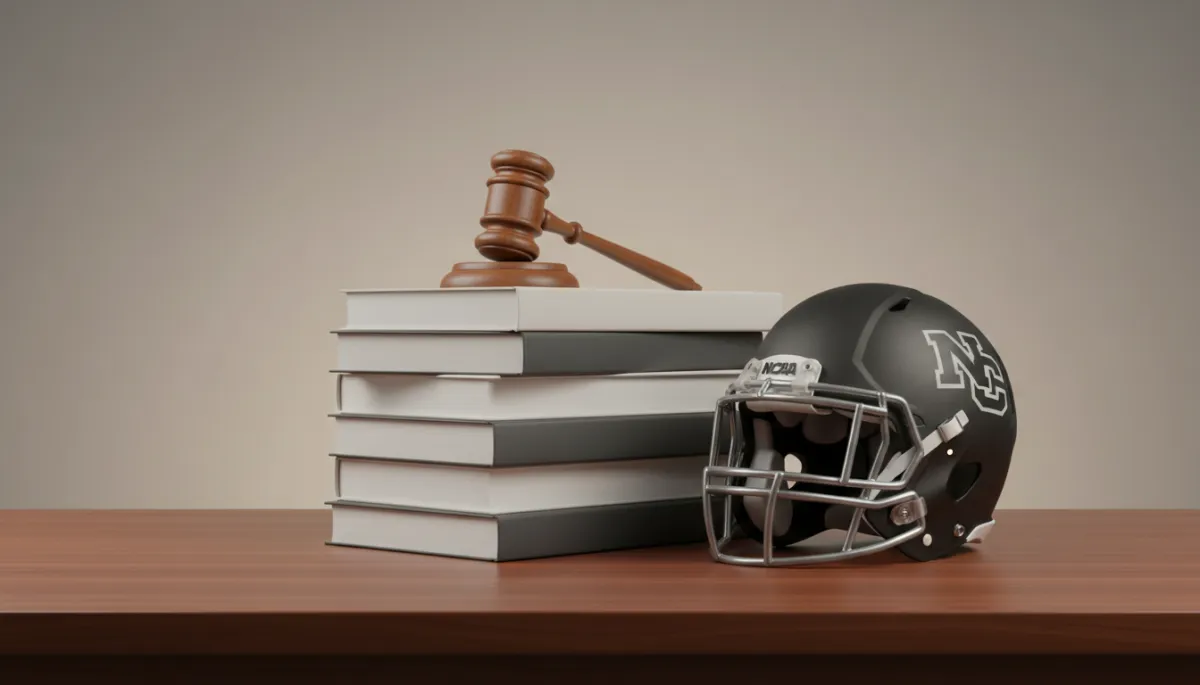
Eligibility and NIL lawsuits are steadily shifting power away from the NCAA and toward athletes.
3. Betting, Back Pay, and Former Stars: Other Football‑Linked Cases
Not all 2026 cases are about eligibility clocks or NIL caps. A few high‑profile matters show just how wide the legal battlefield has become.
Brendan Sorsby (Texas Tech QB) – Betting Case: After admitting he placed bets while at Indiana, quarterback Brendan Sorsby challenged NCAA sanctions. On June 8, 2026, a Texas court granted a temporary injunction letting him play for Texas Tech (with a two‑game suspension) and blocking NCAA enforcement against him for the 2026 season (legalclarity.org). This is another individual football lawsuit reshaping discipline rules.
Williams v. NCAA & Elliott v. NCAA: Former football stars, including wide receiver Jameson Williams and a former Ohio State running back, filed 2026 lawsuits claiming the NCAA and major conferences profited from their NIL without fair compensation. These cases, now in federal courts, seek back pay for past exploitation of their names and likenesses (collegesportslitigationtracker.com).
Putting It Together: Counting the 2026 Football‑Related Lawsuits
When people ask, “How many NCAA lawsuits against college football players happened in 2026?” they’re often looking for a simple number. The reality is more nuanced, but we can draw some clear conclusions from the public record as of mid‑July 2026:
There are at least 5–7 clearly identifiable 2026 cases where college football players are named plaintiffs or central figures (including Ili & Mirer, the parallel NIL class action, Robinson, Tristan Smith, Sorsby, and former‑player NIL back‑pay suits).
Football players are also part of broader athlete classes in dozens of eligibility and compensation lawsuits filed before and during 2026, including challenges to the new age‑based eligibility model, the five‑year rule, and the House settlement’s revenue‑sharing structure.
Overall, legal trackers report more than 60 eligibility‑related lawsuits across NCAA sports in 2026, many of which either name football players or will decisively shape their opportunities to compete and earn (legalclarity.org).
💡 Pro Tip for Fans and Recruits: When you hear about “NCAA lawsuits,” remember that each case can rewrite the rulebook for scholarships, transfers, NIL money, and even how long a player can stay on the field.
Why 2026 May Be a Turning Point for College Football
The sheer volume and variety of 2026 lawsuits show that the old model of NCAA control is under sustained pressure. From NIL caps to age‑based eligibility and betting discipline, college football players are no longer just subjects of the rules—they are active challengers in courtrooms across the country.
As these cases move forward through late 2026 and into 2027, expect more headlines, more injunctions, and likely more settlements. What’s clear already is that college football’s future will be shaped as much by judges and lawyers as by coaches and athletic directors.
If you’re a current or former college football player—or a parent trying to navigate these changes—consider booking a free consultation with our team to understand your rights, options, and potential next steps.