NCAA Football Conferences: Impact on Recruiting
College Football, NCAA Recruiting
What Are NCAA College Football Conferences—and How Do They Shape Recruiting?
NCAA college football conferences do far more than organize schedules. They influence television exposure, competition level, travel, and—most importantly for high school athletes—recruiting. Understanding how conferences work is key to seeing why certain programs consistently sign top talent.
What Exactly Are NCAA College Football Conferences?
At their simplest, NCAA college football conferences are groups of schools that agree to compete against one another on a regular basis. They are formal leagues, usually built around geography, institutional similarities, and shared financial interests. The best-known conferences include the SEC, Big Ten, ACC, Big 12, and Pac-12, alongside others like the American Athletic Conference, Mountain West, and Sun Belt.
Each conference helps organize who plays whom, sets rules for scheduling, negotiates television and media deals, and distributes revenue to member schools. While the NCAA oversees broad rules and eligibility, conferences function like regional governing bodies within that larger structure, especially at the Football Bowl Subdivision (FBS) level where the biggest programs compete.
Conferences also determine championship pathways. Most hold their own conference championship games, and performance within the league heavily influences which teams get invited to major bowl games and the College Football Playoff. For recruits, that means the conference a school belongs to often signals the kind of stage they’ll be playing on in November and December.
How Conferences Impact College Football Recruiting
When a high school prospect chooses a college, they’re not just picking a campus or a coaching staff—they’re also choosing a conference environment. That choice affects visibility, competition, travel, and even long-term career opportunities. Here’s how conferences shape the recruiting landscape.
1. National TV Exposure and Brand Power
Power conferences negotiate massive television contracts. Games are broadcast on major networks and streaming platforms, putting players in front of millions of viewers every week. For recruits with NFL aspirations—or those who hope to build their personal brand and NIL (Name, Image, and Likeness) opportunities—this level of exposure is a huge draw.
Smaller conferences may not match that national spotlight, but they can still offer regional TV deals and strong local followings. Some recruits prefer being a standout star in a slightly smaller league rather than one of many blue-chip prospects in a powerhouse conference.
2. Level of Competition and Path to the NFL
Conferences are often informally ranked by strength. Playing in a league known for elite competition can be appealing to recruits who want to test themselves against the best and show NFL scouts they can perform at the highest level. Weekly matchups against ranked opponents, hostile road environments, and deep conference schedules are selling points for top programs on the recruiting trail.
That said, scouts evaluate talent everywhere. Recruits and their families increasingly weigh whether a conference gives them a realistic chance to see the field early rather than sitting behind older stars for multiple seasons. A slightly less glamorous conference can still be the better route for development and playing time.
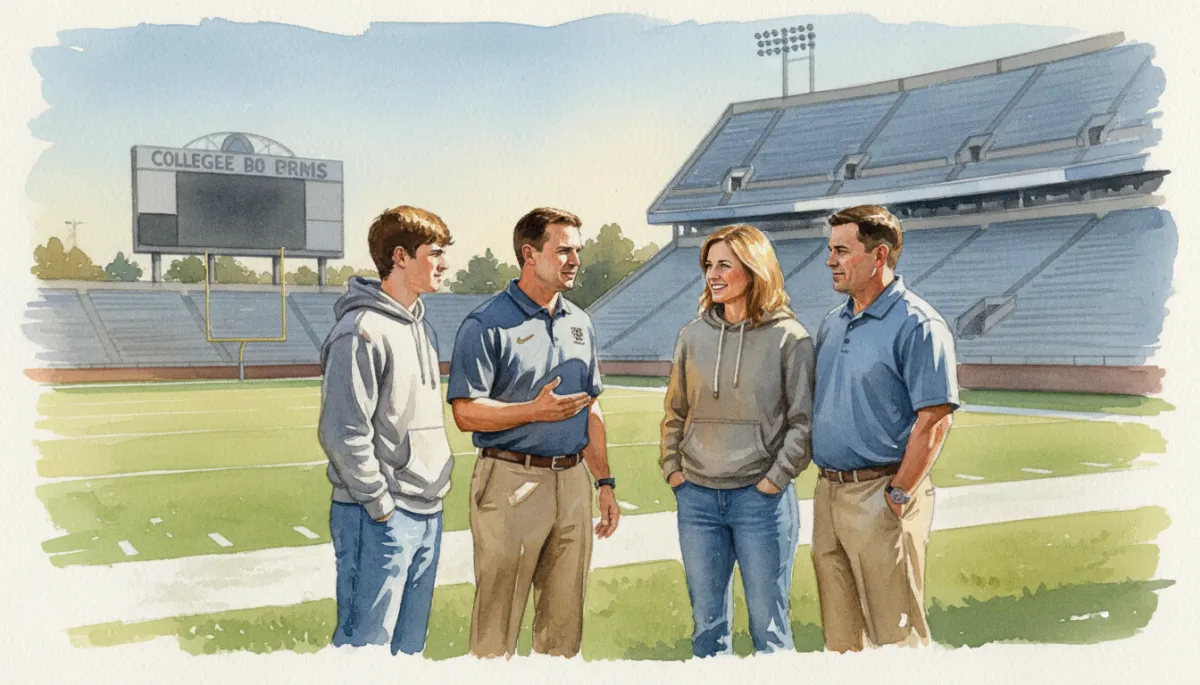
Conference prestige, TV exposure, and travel all factor into recruits’ final decisions.
3. Geography, Travel, and Family Access
Conferences are traditionally built around regions—the Southeast, Midwest, West Coast, and so on. That affects recruiting in two big ways. First, schools tend to recruit heavily within their conference footprint, building pipelines to local high schools. Second, recruits often want their families to be able to attend road games without flying across the country every weekend.
As realignment has stretched some conferences coast-to-coast, travel demands have grown. Recruits now ask more questions about how far they’ll be on the road, how much class time they’ll miss, and whether their support systems can realistically follow their careers. A conference’s map can be as important as its trophy case.
4. Money, Facilities, and Support Resources
Conference media deals directly influence how much money athletic departments have to spend. Wealthier leagues often translate that revenue into upgraded facilities, nutrition programs, academic support, and recruiting budgets. When a recruit tours a campus and sees new locker rooms, training centers, and recovery spaces, they’re seeing the impact of conference alignment in concrete form.
For many prospects, these resources signal how seriously a school and its conference take football. The combination of financial backing and conference stability can be a deciding factor, particularly for top-tier recruits choosing between multiple offers.
Why Conferences Matter So Much to Recruits
Ultimately, NCAA college football conferences shape the experience a recruit will have over four or five years: who they play, how often they’re on national TV, how far they travel, and how much support surrounds them. While coaching relationships and campus fit still matter enormously, conference affiliation often serves as a shorthand for opportunity, visibility, and stability.
For families trying to navigate the recruiting process, understanding what conferences are—and how they influence everything from exposure to facilities—turns a confusing alphabet soup of league names into a clear part of the decision-making puzzle.
📌 Key Takeaway: If you’re unsure how conference fit should factor into your athlete’s decision, talking it through with an expert can save time, stress, and missed opportunities.
Ready to get personalized guidance? Book a free recruiting consultation with our team and walk through your athlete’s goals, target conferences, and best-fit schools step by step.