
Why You Should Never Sign a College Football Agreement Without a Legal Consultation
College Sports, Legal Advice
Why You Should Pay for a Legal Consultation Before Signing Any College Football Agreement
College football opportunities can be life-changing, but the agreements behind them can also shape your future for years to come. A brief, paid legal consultation is one of the smartest investments you can make before signing anything tied to your athletic career.
College Football Agreements Are Legal Contracts, Not Just Paperwork
Whether it is a National Letter of Intent, scholarship agreement, walk-on offer, Name, Image and Likeness (NIL) deal, or a social media endorsement, you are not just “signing some forms.” You are entering into binding legal contracts that can affect your eligibility, finances, and freedom to make choices later on. A lawyer reads those documents with one goal: protecting you, not the school, not the collective, and not the brand.
Hidden Terms Can Limit Your Options for Years
Many college football agreements are written in dense, technical language. Buried inside can be clauses that:
Restrict your ability to transfer or enter the portal without losing eligibility or benefits
Tie you to a school, collective, or brand beyond your time on campus
Give away rights to your name, image, and likeness for little or no compensation
A legal consultation helps you understand what you are agreeing to today and what it may cost you tomorrow. Once you sign, it is often too late to fix a bad deal without stress, conflict, or financial loss.
A Small Upfront Cost Can Prevent Much Bigger Problems
Paying for a legal consultation may feel like an extra expense during an exciting time, but it is usually a fraction of what is at stake. One overlooked clause can lead to:
Lost scholarship money or unexpected fees you did not plan for
Conflicts with NCAA or conference rules that affect your eligibility
Disputes with brands or collectives over how and when you can be paid
📌 Key Takeaway: A one-time consultation fee is often far cheaper than trying to escape a restrictive or unfair contract later.
An Attorney Works Only for You, Not the Program
Coaches, recruiters, and administrators may genuinely want the best for you, but they ultimately represent the school or organization. Their job is to protect that institution’s interests. A private attorney’s job is different: they owe a duty to you alone. They can:
Translate legal terms into clear, everyday language you and your family understand
Point out red flags and suggest changes or protections you can request
Help you compare offers so you are not pressured into accepting the first deal
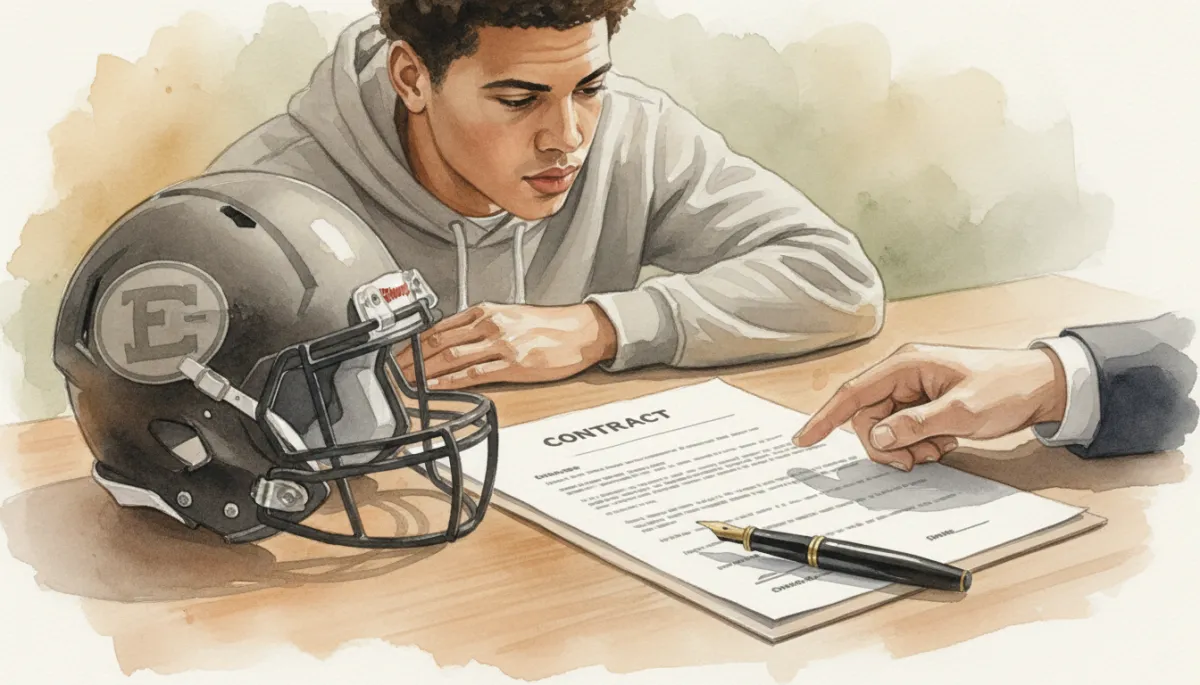
A brief legal review often uncovers contract terms athletes did not realize they were accepting.
Protect Your Future Beyond Football
Your college football years are important, but they are only part of your life. The agreements you sign can affect your education, your ability to pursue other opportunities, and even how you use your own name and image after your playing days are over. Paying for a legal consultation is not about being difficult or distrustful; it is about being informed, confident, and in control of your own future. Before you pick up the pen, pick up the phone and talk to a qualified attorney. If you do not know where to start, book a free consultation and ask for a trusted referral to an attorney who understands college athletics and NIL issues.