
Football Recruiting for Non-Varsity Athletes
High School Sports, Football Recruiting
What Recruiting Looks Like for Athletes at Schools Without a Varsity Program
For student-athletes whose high schools don’t offer varsity football, the recruiting journey can feel confusing and unfair. Yet each year, college coaches successfully recruit players from co-op teams and non-traditional programs. The path just looks a little different—and understanding that path can turn uncertainty into opportunity.
How Recruiting Works When Your School Has No Varsity Football
When a high school doesn’t sponsor varsity football, athletes often worry that college coaches will overlook them. In reality, recruiters care far more about verified competition level, film, and academics than about whether your home school has its own team name on your jersey. Still, there are a few key differences in how the process unfolds.
Your “school” on paper may differ from your team name. On rosters and Hudl pages, you might be listed under the co-op program instead of your actual high school. That’s normal, but you must clearly communicate both to coaches.
Exposure is less automatic. Traditional powerhouse programs attract college coaches by reputation alone. Co-op teams often don’t, so you’ll need to be more proactive with emails, camp attendance, and social media.
Verification matters even more. Because your situation is less familiar, coaches may ask extra questions about your league, schedule, and role on the team to gauge your level of play.
💡 Pro Tip: In every message to college coaches, clearly list your home high school, your co-op team name, and the league or division you compete in. Remove the guesswork for recruiters.
Understanding Co-Op Teams in High School Football
A co-op team (sometimes called a cooperative or combined program) allows athletes from two or more schools to form one roster. This setup is common in areas where individual schools don’t have enough players, funding, or facilities to support a full varsity football program on their own.
One school is usually designated as the “host” school, managing coaches, practice fields, and game operations.
Athletes retain academic enrollment and transcripts at their home schools, even though they compete under a shared team name and mascot.
State associations treat co-op teams as full varsity programs, assigning them to divisions and playoff brackets like any other school.
From a recruiting standpoint, this structure is not a disadvantage by itself. Many college coaches are familiar with co-op arrangements, especially in smaller states or rural areas. What they need is clarity: who you are, where you attend school, and who to contact for evaluations.
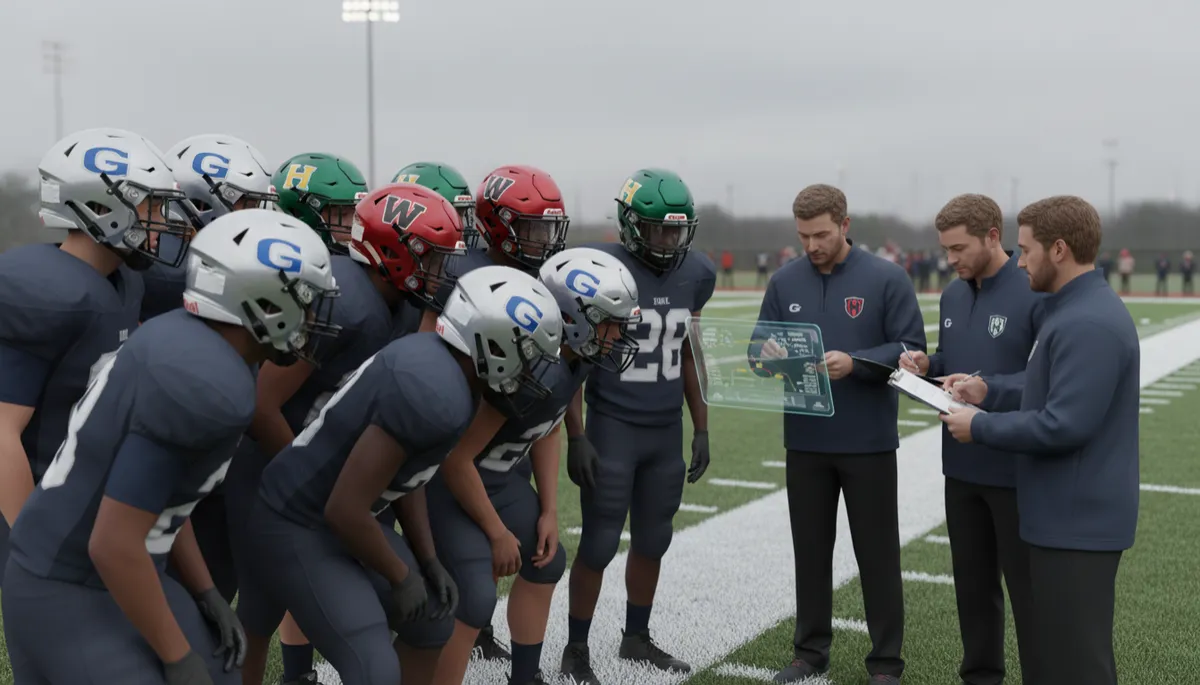
Co-op teams can still offer varsity-level competition and valuable recruiting film.
What College Coaches Look For in Co-Op Athletes
Whether you play for a traditional powerhouse or a small co-op, the core evaluation criteria stay the same. Coaches focus on:
Game film: Clear, well-edited highlights and full game clips against quality opponents.
Size, speed, and measurables: Verified height, weight, 40-yard dash, shuttle, and lifting numbers, ideally from camps or combines.
Academic profile: GPA, core courses, and test scores that align with NCAA and institutional standards.
Recommendations: Honest evaluations from your head coach, position coach, and sometimes opposing coaches.
If your co-op team plays a competitive schedule and you can demonstrate impact—starting snaps, leadership, production on the field—college programs will take notice. Your job is to package that information in a way that’s easy for them to evaluate quickly.
Practical Steps to Get Recruited from a Co-Op Program
Build a complete, honest player profile. Include your home school, co-op team name, graduation year, position, measurables, GPA, and contact information for both you and your coach.
Create strong highlight film. Label your jersey number, position, and co-op team name at the start. Make sure clips show you against your best competition, not just blowouts.
Communicate early and often. Message college coaches with a short introduction, your film link, academic info, and a clear explanation of your co-op situation in one or two sentences.
Use camps and showcases strategically. Camps level the playing field. When you compete in front of college staffs, they see you—not your school size or logo.
Lean on your coaches. Ask your co-op head coach and position coach to advocate for you with college contacts and to respond promptly when recruiters reach out.
📌 Key Takeaway: Playing on a co-op team doesn’t close recruiting doors—it simply requires clearer communication, strong film, and a proactive plan.
Final Thoughts for Athletes Without a Varsity Program
If your school doesn’t sponsor varsity football, your dream of playing in college is still very much alive. Co-op teams exist to provide you with a legitimate competitive platform—and college coaches increasingly understand that reality. Focus on what you can control: your development, your academics, your film, and your communication with programs that fit your level.
🎯 Ready to Get Noticed? Join our free Facebook group for football parents — recruiting education, real wins from real families, and direct guidance from a former zero-star recruit turned ACC & SEC starter. Click here to join the group and start getting your athlete in front of the right eyes.