Handling Football Recruiting Amid NCAA Probes
College Football, Recruiting, NCAA Investigations
How To Handle Recruiting Interest From a Program Currently Under NCAA Investigation
When a college under NCAA investigation shows strong interest in your son, it can feel both exciting and unsettling. Here’s how to slow things down, get the facts, and protect his future on and off the field.
Start With One Guiding Principle: Protect the Long-Term, Not the Weekend Visit
A campus visit, a phone call from a well-known coach, or a social media graphic can be thrilling. But when that interest comes from a program currently under NCAA investigation, your role as a parent is to be the calm voice in the room. Your job is not to say “yes” or “no” on day one; it’s to gather information, slow the process down, and help your son see beyond the next season to his entire college career and degree.
📌 Key Takeaway: Treat NCAA investigations as a serious yellow light, not an automatic red or green one. Pause, ask questions, and evaluate carefully.
Understand What the NCAA Investigation Is Really About
Not all NCAA cases are the same. Some involve academic issues or paperwork mistakes. Others strike at the heart of competition, like sports betting, game manipulation, or recruiting tampering. Recent enforcement trends show the NCAA is taking integrity and recruiting violations more seriously than ever, with harsh penalties for schools and individuals.
In 2026, the NCAA found that football staffs at Iowa and North Dakota made impermissible contact with players who were not yet in the transfer portal, leading to probation, fines, recruiting restrictions, and coach suspensions for tampering violations (ncaa.org, ncaa.org).
In basketball, several programs have been hit with Level I sports betting and game manipulation violations, with some athletes ruled permanently ineligible (ncaa.org).
When a football program is under investigation, ask: Is the case about recruiting tampering, sports betting, academic issues, NIL, or something else? Integrity and recruiting violations are more likely to affect your son’s eligibility, his coaches’ stability, and the team’s future than a narrow paperwork mistake in another sport.
Questions Parents Should Ask the Coaching Staff Directly
You are allowed to ask direct, respectful questions. In fact, you should. Before your son gets emotionally attached to the idea of committing, schedule a call or in-person meeting and ask:
“What is the NCAA investigation about, and which sport or staff members are involved?” Clarify whether football is directly implicated or if the case is in another sport but could still affect the athletic department’s reputation and resources.
“Where does the case stand right now?” Is it an active investigation, a negotiated resolution, or probation with terms already set? Programs like Iowa and North Dakota accepted penalties including one-game suspensions and recruiting limits; knowing whether your son is walking into a similar situation matters.
“What possible penalties are still on the table?” Could the team lose scholarships, face a postseason ban, or see staff changes? Even if coaches can’t share every detail, you can gauge whether they are being transparent and realistic.
“How will any sanctions affect current and incoming players?” Ask specifically about playing time opportunities, roster numbers, and academic support if resources are shifted to compliance.
Research Beyond the Sales Pitch: Use Public Records and Neutral Sources
Don’t rely only on what the staff tells you. Many NCAA cases are publicly documented. You can:
Search the school’s name plus “NCAA investigation” or “NCAA probation.” The NCAA’s own site regularly publishes case summaries and penalties, including tampering cases and sports betting violations.
Check recent news articles and local reporting for context. Local journalists often know whether more penalties might be coming or if the program has a pattern of issues.
Look up whether the school is currently on probation and when that probation ends. In 2026, for example, several FBS football programs, including Michigan and Kentucky, are on probation through 2027 for various violations. That status can shape how closely the NCAA will watch them in the coming years.
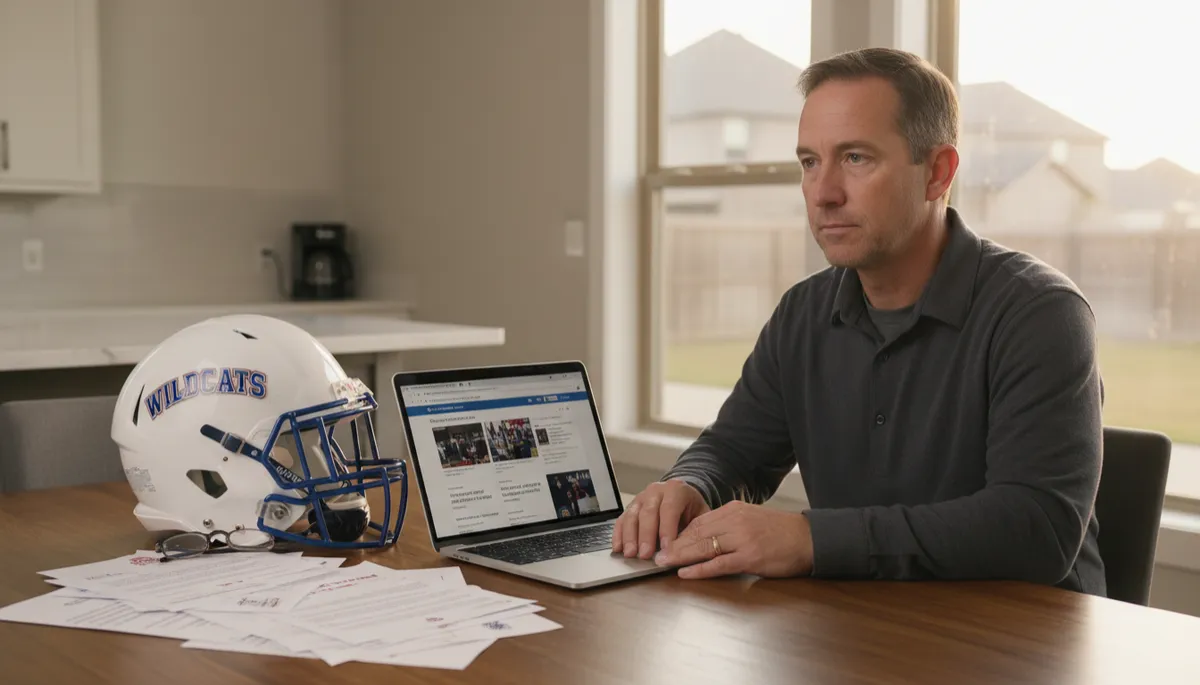
Independent research helps parents see beyond the recruiting pitch and weigh real risks.
Think Through How Sanctions Could Affect Your Son’s Day-to-Day Experience
Even if your son keeps his personal eligibility, program penalties can change his reality on campus. As the NCAA tightens rules around “ghost transfers,” tampering, and off-campus recruiting, schools that cross the line may face:
Reduced scholarships or roster spots, which can create depth-chart chaos and more competition for limited playing time.
Postseason bans, eliminating bowl games or conference championships during part of his career.
Coaching suspensions or turnover, which can disrupt player development, scheme continuity, and the relationship your son thought he was committing to.
Ask the staff how they are planning for different scenarios. A responsible program will have a clear plan to protect current and incoming players if sanctions deepen or timelines shift.
📌 Key Takeaway: A program that owns its mistakes, cooperates fully, and clearly changes behavior is a different risk than one that minimizes or hides issues.
Use Trusted Advisors: High School Coaches, Club Coaches, and Neutral Experts
You do not have to navigate this alone. Share what you’ve learned with your son’s high school or club coach, and, if possible, with a guidance counselor or attorney familiar with college sports. They can:
Provide context about how serious the alleged violations are and how similar cases have played out at other schools.
Help you compare this opportunity with others that may be less risky but still strong fits athletically and academically.
Remind your son that his value as a player does not depend on one particular logo or conference.
Talk Honestly With Your Son About Risk, Values, and Backup Plans
Ultimately, this is your son’s life and career. Your role is to help him see the full picture. Sit down together and discuss:
His priorities: Is he chasing a specific conference, a chance to play early, a particular major, or simply the biggest name? How does an active NCAA investigation fit into those priorities?
His tolerance for uncertainty: Some athletes are comfortable taking a calculated risk for a high-profile opportunity; others would rather choose stability and a clear path to the field and a degree.
Backup options: If sanctions worsen or the staff changes dramatically, what is the plan? With the transfer portal rules tightening and new penalties for “ghost transfers,” switching schools later may be more complicated and more closely monitored than in past years.
Final Thoughts: Lead With Questions, Not Fear
An NCAA investigation doesn’t automatically mean your son should cross a school off his list. But it does mean you must parent differently, more like an advisor than a fan.
🎯 Ready to Get Noticed? Join our free Facebook group for football parents — recruiting education, real wins from real families, and direct guidance from a former zero-star recruit turned ACC & SEC starter. Click here to join the group and start getting your athlete in front of the right eyes.