
Concussion Symptoms for High School Football Parents
Health, Youth Sports Safety
Concussion Symptoms in High School Football: A Parent’s Essential Safety Guide
High school football can be an incredible experience, but it also carries a real risk of concussion. Knowing the warning signs—on and off the field—helps parents protect their players’ brains for the long term.
Why Concussion Awareness Matters for Football Parents
Concussions are a type of mild traumatic brain injury caused by a blow or jolt to the head or body that makes the brain move quickly inside the skull. In high school football, hits can be hard and frequent, and symptoms are not always obvious right away. Your child might walk off the field seeming mostly fine, only to feel much worse hours later at home. That is why parents of high school football players play a crucial role in spotting concussion symptoms and making sure their child gets proper care.
Immediate Red-Flag Symptoms: When to Seek Emergency Care
After a hit, some symptoms suggest a more serious injury that needs emergency attention right away. Call 911 or go to the ER if you notice:
Loss of consciousness, even for a few seconds, or your child cannot be awakened easily
Repeated vomiting or nausea that keeps getting worse
One pupil larger than the other or unusual eye movements
Slurred speech, weakness, numbness, or trouble walking or using their arms or legs
A headache that is severe and rapidly worsening
⚠️ Warning: If your gut says something is seriously wrong, trust it. It is always safer to have a healthcare professional check your child after a hard hit to the head.
Common Concussion Symptoms You Might See on the Sideline
Not every concussion looks dramatic. Many players never pass out. Instead, you may notice more subtle changes in how your child looks, moves, or talks right after a collision. Pay close attention if your football player:
Appears dazed, stunned, or glassy-eyed, staring into space or reacting slowly
Seems confused about the score, the play, or where they are on the field
Asks the same question over and over, such as “What happened?” or “Did we win?”
Is unsteady on their feet, swaying, or struggling to keep their balance
Forgets plays they just ran or cannot recall events right before or after the hit
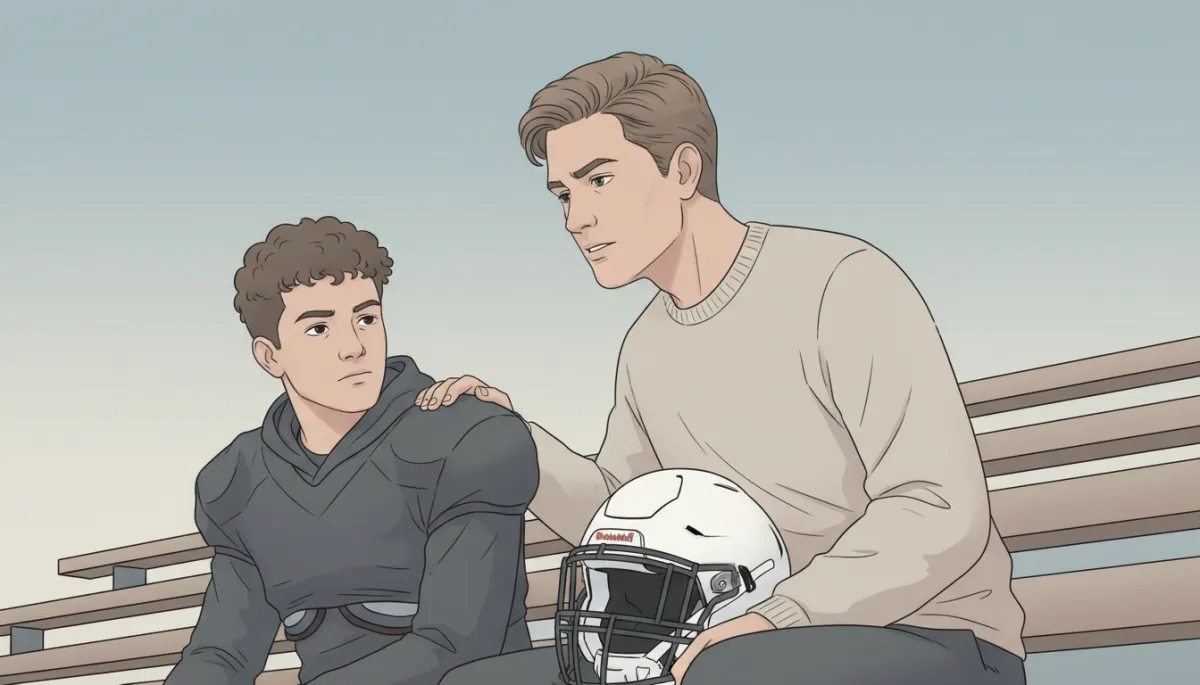
A calm, honest sideline conversation often reveals symptoms your child may hide from coaches.
Symptoms Parents Often Notice Later at Home
Some concussion symptoms develop or become more obvious hours after the game, once the adrenaline wears off. For parents of high school football players, the hours after a hit are just as important as the moments on the field. Watch for:
Headache that will not go away or gets worse with light, noise, or movement
Dizziness, feeling “off balance,” or a sense that the room is spinning
Sensitivity to light or noise, wanting the room dark and quiet
Blurry or double vision, or trouble focusing on a screen or book
Trouble concentrating, remembering homework, or following conversations
Feeling unusually irritable, emotional, sad, or anxious for no clear reason
Sleeping much more or much less than usual, or having trouble falling asleep
💡 Pro Tip for Parents: Write down when the hit happened and every symptom you notice, even mild ones. This record can help your child’s doctor make safer decisions about diagnosis and return to play.
What to Do if You Suspect a Concussion
If you think your high school football player might have a concussion, the most important rule is simple: when in doubt, sit them out. They should not return to the game, practice, or any contact drills until a healthcare professional experienced with concussions has evaluated them and cleared them. Rest from screens, schoolwork, and intense physical activity may be recommended at first, followed by a gradual, step-by-step return to school and sports.
As a parent, you are your child’s strongest advocate. Many teens feel pressure to “shake it off” or stay in the game. By knowing the full range of concussion symptoms and taking them seriously, you help protect not just your player’s season, but their brain health for years to come.
📌 Next Step: If you are worried about a possible concussion, do not wait. Book a free consultation with our team today, and we can help you get a timely medical referral to a concussion-trained specialist so your athlete receives the expert care they need.