Inside a College Special Teams Coordinator's Mind
College Football, Special Teams, Recruiting Insight
What a Program’s Special Teams Coordinator Looks For That Other Coaches Don’t
Special teams coordinators see the game through a different lens. While most eyes follow star quarterbacks and lockdown corners, these coaches are quietly hunting for traits others overlook—details that win hidden yards, flip momentum, and ultimately decide close games.
The Specialist’s Mindset: Why Their Checklist Is Different
Special teams coordinators live in the margins of the game—kickoffs, punts, field goals, and returns where one snap can swing the scoreboard. Because their units are built from every position group, they evaluate players differently from position coaches who focus on one role and one skill set.
A receivers coach might ask, “Can he separate and catch?” A linebackers coach might ask, “Can he fill and tackle?” The special teams coordinator is asking a broader question: “Can this player help us win the 40–50 snaps that everyone else forgets about?”
1. Body Type and Movement for Space, Not Just Position
Position coaches often picture you in a tight, defined space—on the line of scrimmage, in the box, or on the numbers. Special teams coordinators think in open grass. They’re looking for players who can run, bend, and change direction while covering long distances at full speed.
Long striders who can eat up ground on kick coverage.
Lean, wiry frames that can run and still take contact without losing balance.
Players who look natural in space—no wasted steps, no panic when the field opens up.
A player who is “tweener” size for offense or defense might be perfect on special teams. Where another coach sees “not quite big enough” or “not quite fast enough,” the special teams coordinator sees a core contributor on four units.
2. Competitive Toughness on Every Snap, Not Just Big Downs
Special teams plays are often full-speed collisions in wide-open space. There’s no hiding, no coasting, and no “taking a play off.” That’s why coordinators study effort on the edges of film that others might ignore:
How hard you chase on a play that’s going away from you.
Whether you finish blocks on the perimeter until the whistle.
Your reaction after a mistake—do you jog, or do you sprint to fix it?
To a special teams coordinator, toughness isn’t just about big hits. It’s about relentless competitiveness on snaps that some players secretly treat as “in-between” plays. Those players don’t last long on special teams depth charts.
3. Football Intelligence in Chaos and Split-Second Decisions
Special teams situations are unpredictable—bad snaps, tipped punts, rolling kicks, funky formations. Coordinators value players who can solve problems in real time, not just execute a script when everything goes perfectly.
Does the returner know when to fair catch, when to let it bounce, and when to risk a return?
Does a front-line blocker recognize surprise onside kicks or fake punts before they happen?
Can a coverage player adjust his angle when the ball takes a strange bounce?
Position coaches often test scheme knowledge in the meeting room. Special teams coordinators are watching for instinct—how you react when the picture is messy and the clock is ticking down.
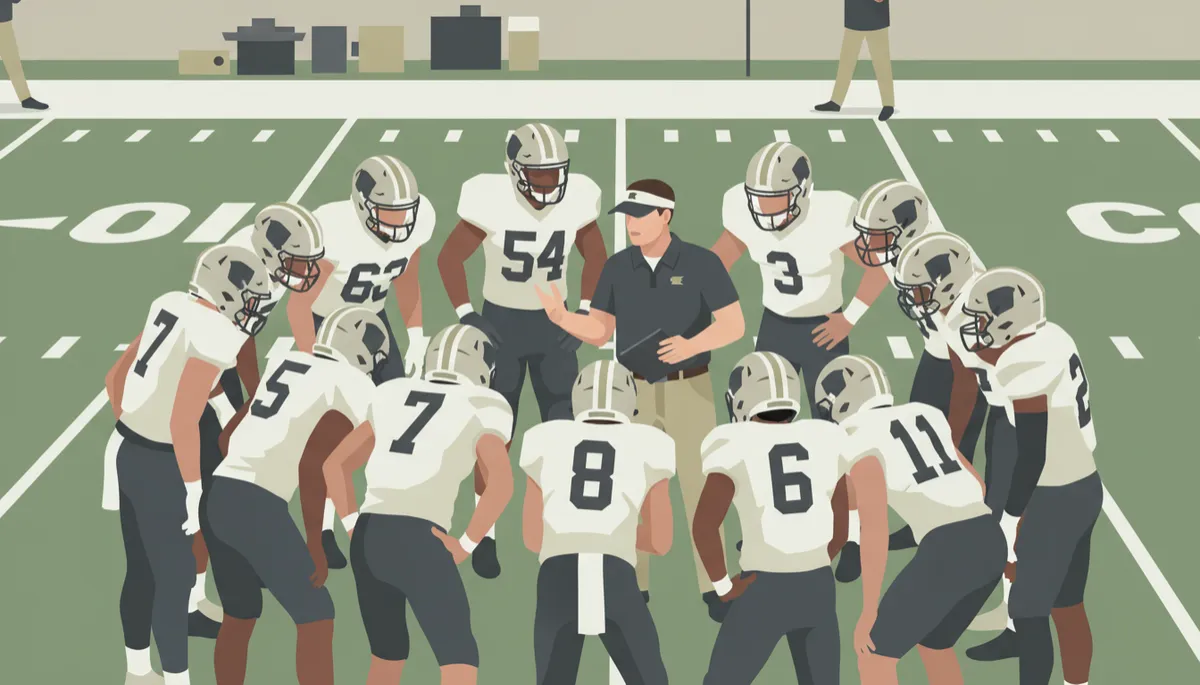
Special teams meetings reward players who process adjustments quickly under pressure.
4. Versatility and Willingness to Wear Multiple Hats
A special teams coordinator might have only a handful of true “specialists” like kickers and long snappers. Everyone else is judged on how many roles they can fill. That’s a major difference from position rooms, where you might only be asked to master one job description.
Can a backup receiver also be a gunner, a hold-up player, and a kick return off-returner?
Can a young linebacker play on punt, punt return, kickoff, and kickoff return without mental busts?
Can a running back step into protection roles on field goal and PAT units?
The more hats you can wear, the more valuable you become. Other coaches might see you as “second-string.” The special teams coordinator might see you as indispensable because you touch four different phases of the game.
5. Detail Discipline: Steps, Angles, and Situational Awareness
On special teams, the margin for error is tiny. A bad split, a lazy first step, or a poor angle can turn into a blocked kick or a touchdown the other way. Coordinators obsess over details that rarely show up on stat sheets.
Exact launch points on coverage so lanes stay intact.
Hand placement and pad level on protection against edge rushers.
Knowing the game situation—when a touchback is worth more than a risky return.
Where other coaches might focus on highlight plays, special teams coordinators are quietly grading you on precision: your alignment, your timing, your awareness of the clock and field position on every single snap.
6. Attitude Toward Special Teams: Pride or Obligation?
One of the biggest differences in what special teams coordinators look for is mindset. They notice who rolls their eyes when special teams period starts—and who sprints to the drill with energy and intent.
Do you treat special teams as a chance to get on the field, or as a chore?
Do you ask questions, take notes, and study film of units you’re on?
Are you willing to embrace less glamorous roles—decoy, shield, personal protector—if it helps the team win?
Other coaches might only see your attitude in their individual periods. Special teams coordinators see how you respond when the spotlight is smaller but the stakes are still huge. Players who bring pride and urgency to these snaps quickly become trusted pieces of the game plan.
Turning Overlooked Traits into Opportunity
In every recruiting class, there are athletes who may never be the headliner on offense or defense—but become difference-makers because a special teams coordinator saw what others didn’t. Long speed, effort on throwaway plays, poise in chaos, versatility, detail discipline, and a genuine love for special teams can all open doors that raw stats never will.
🎯 Ready to Get Noticed? Join our free Facebook group for football parents — recruiting education, real wins from real families, and direct guidance from a former zero-star recruit turned ACC & SEC starter. Click here to join the group and start getting your athlete in front of the right eyes.