
Inside a College Football Recruiting Coordinator's Role
College Football, Recruiting, Behind the Scenes
What a Recruiting Coordinator’s Job Actually Looks Like Behind the Scenes
When fans think about college football recruiting, they picture four-star commitments, hat ceremonies, and viral highlight tapes. But behind every “I’m committed” post is a recruiting coordinator juggling relationships, regulations, and relentless logistics. Here’s what the job really looks like when the cameras are off.
The Hub of the Operation, Not Just a Paper Pusher
A recruiting coordinator is the program’s central connector. They’re not just sending mailers and answering phones; they’re managing the entire pipeline of talent from early identification to signing day. Think of them as the project manager of the roster, making sure coaches, prospects, families, and compliance staff are all on the same page and on schedule.
Scouting Never Stops: Film, Data, and Projections
A huge chunk of the job is spent evaluating talent. That means hours in front of a screen watching Hudl links, game cut-ups, and camp footage. The coordinator helps build and maintain the recruiting board: who’s a no-brainer offer, who needs another season of development, and who might be a late-blooming steal.
It’s not just about raw ability. They’re weighing height, speed, academic profile, character references, and how a player fits the scheme and culture. Coordinators constantly compare prospects to current roster players and future needs, trying to avoid position logjams and depth-chart holes two or three years down the road.
Relationship Builder, Matchmaker, and Tour Guide
Behind every commitment is a long trail of calls, texts, and check-ins. The recruiting coordinator is often the first consistent point of contact for a prospect and their family. They schedule conversations with position coaches, make sure head coaches connect at the right time, and keep relationships warm even when a recruit is still “just a name on a list.”
When prospects visit campus, the coordinator becomes a host and tour architect. They design visit itineraries, pair recruits with current players, arrange academic meetings, and orchestrate that “wow” moment when a player and family can truly picture themselves there. None of that is accidental; it’s scripted down to the minute so every recruit feels like a priority.
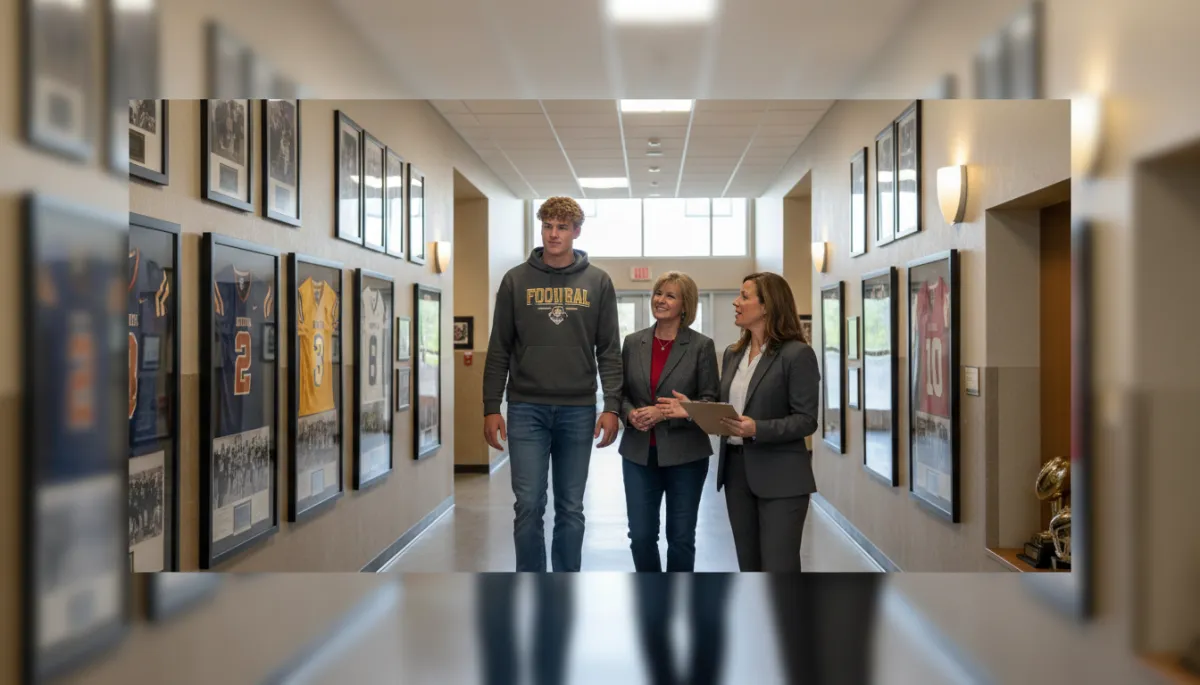
Campus visits are carefully choreographed to showcase culture, academics, and opportunity.
Master of Calendars, Calls, and Chaos
The recruiting calendar is crowded with contact periods, quiet periods, dead periods, camps, junior days, and official visits. The coordinator’s behind-the-scenes reality is a maze of spreadsheets, databases, and group chats. They track which coach is visiting which high school, who needs a follow-up call, and which families are flying in this weekend.
They also manage a constant stream of communication: DMs from prospects, emails from high school coaches, messages from parents, and internal notes from the staff. The job requires quick responses and a steady tone, even late at night or early in the morning when recruits and parents finally have time to talk.
Compliance, Paperwork, and the Fine Print No One Sees
While coaches dream about future stars, the recruiting coordinator has to make sure everything is legal. They work closely with compliance staff to monitor contact rules, official visit limits, academic eligibility, and the fine print around offers and letters of intent. One misstep in communication timing or paperwork can cost a program dearly, so attention to detail is non-negotiable.
From transcripts and test scores to waivers and signatures, they keep files updated and organized. On signing day, when fans see photos of hats and pens, the coordinator is the one who has already triple-checked every document, time stamp, and form so those moments go off without a hitch.
Balancing the Portal, High School Recruits, and the Future
Modern recruiting isn’t just about high school seniors. The transfer portal and junior college ranks add new layers of complexity. A recruiting coordinator helps the staff decide when to pursue an experienced transfer versus a long-term high school prospect, constantly updating the board as players enter or exit the portal and as current roster needs change due to injuries or departures.
That means they’re always thinking in multiple timeframes: this season’s depth, next season’s competition, and the long-term health of the roster. It’s a chess match, and they’re the ones quietly moving the pieces in the background.
The Reality: Long Hours, Little Spotlight, Huge Impact
🎯 Ready to Get Noticed? Send us your game film and we’ll build a college‑ready highlight reel that flows, spotlights your best plays, and is easy for recruiters to evaluate in the first 30–60 seconds. Click here to get your highlight tape edited and start standing out on every coach’s screen.