College Football Drug Testing Frequency Explained
College Sports, Athlete Wellness, Drug Testing
How Often Do College Football Players Get Drug Tested?
College football players know that drug testing is part of the game, but the exact timing and frequency can feel like a mystery. While there is no single schedule that applies to every team and division, there are clear patterns, rules, and expectations that shape how often players can expect to be tested throughout the year.
Who Decides How Often Players Are Tested?
The frequency of drug testing in college football is shaped by three main layers of oversight:
NCAA (or governing body) testing: National-level testing focused on performance-enhancing drugs and certain banned substances.
Conference or association testing: Some conferences add their own programs, especially in high-profile football leagues.
School or team testing: Individual universities often run their own year-round screening, sometimes stricter than national rules.
Because these layers overlap, a player might be tested by the NCAA, by the school, or by both at different points in the year. That is why many athletes describe testing as “random but constant.”
In-Season Testing: How Often During the Football Year?
During the competitive season, testing usually becomes more frequent. While exact numbers vary by program, many college football players can expect:
Random team-wide selections: A portion of the roster may be chosen every few weeks, or even weekly on some campuses, for school-run tests.
Game and postseason focus: NCAA testing is especially common around bowl games, playoffs, and championships, with athletes selected from participating teams.
Importantly, players are usually not told in advance when a test will happen. Notification can come early in the morning, after practice, or around travel days, and athletes are expected to report immediately.
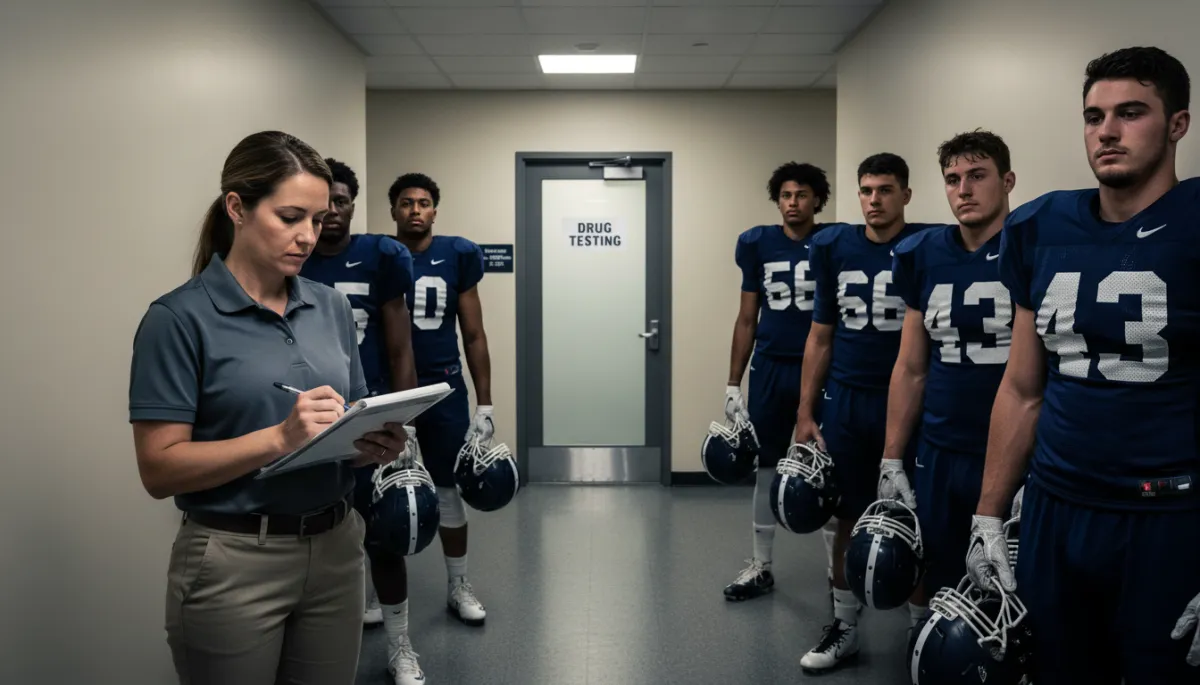
Random selection means some players are tested multiple times in a single season.
Off-Season and Year-Round Testing Expectations
Drug testing is not limited to game weeks. Many programs maintain year-round testing to discourage off-season use of performance enhancers or recreational drugs. In the off-season, players might experience:
Periodic team testing days: The entire roster, or large groups, may be tested one or more times during winter and summer training.
Ongoing random draws: Even in quiet months, a subset of athletes can be called in with little notice.
For players on scholarship or active rosters, the message is simple: assume you can be tested at any point in the calendar year, not just when the stadium lights are on.
So, How Often Are College Football Players Really Tested?
Because testing is random and layered, no two players have the exact same experience. One athlete might be tested several times in a season, while a teammate is tested only once or twice all year. Still, some general patterns help answer the core question of how often testing happens:
Most players on major college football teams can reasonably expect to be tested at least once per year, and often more, through a combination of school and NCAA programs.
On some campuses, frequent random screening means players may be tested multiple times per season, especially if they are starters, traveling regularly, or part of postseason play.
📌 Key Takeaway: There is no fixed number of tests per player, but the system is designed so that any college football athlete should be prepared to be tested at virtually any time, in or out of season.
What This Means for Current and Future Players
For recruits, current players, and families, understanding drug-testing frequency is about more than avoiding penalties. It is about protecting health, eligibility, and long-term opportunities. Because testing is unpredictable, the safest approach is to treat banned substances as completely off-limits and to ask athletic trainers or compliance staff before taking supplements or medications that might raise concerns.
In short, college football players are not tested on a simple weekly schedule, but they are tested consistently enough that any use of banned substances carries serious risk. The combination of random, year-round testing and multiple oversight bodies means players should always assume that the next test could be just around the corner.
💡 Ready to Talk About Your Situation? If you’re a current player, recruit, or parent with questions about drug testing, eligibility, or how to stay compliant, our team is here to help. Book a free, confidential consultation today to get personalized guidance tailored to your program and goals.